Epiroc SB 53 Hydraulic Hammer
Overview
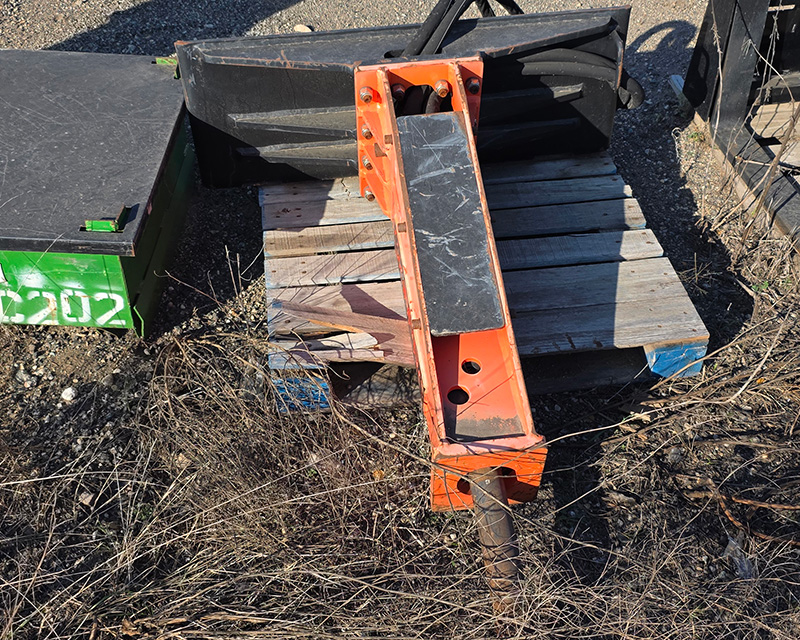
The Epiroc SB 53 is a compact hydraulic hammer from Epiroc Canada, designed for skid steers doing light to medium demolition. Epiroc (formerly Atlas Copco) has a strong dealer and service presence across Canada. The SB 53 is used for concrete demolition, curb removal, frost breaking, and foundation work.
Canada Availability
Best for: concrete demolition, frost breaking, curb removal
Compare with: Atlas Copco SB 102 Hydraulic Breaker (Legacy) · Berlon Industries Skid Steer Hydraulic Breaker · Blue Diamond Skid Steer Hydraulic Breaker
Key Facts
- Model: Epiroc SB 53
- Brand: Epiroc Canada (formerly Atlas Copco)
- Type: hydraulic hammer / breaker
- Class: compact to medium frame
- Application: concrete demolition, frost breaking, curb removal
- Weight: 500–900 lbs
- Hydraulic flow: 8–20 GPM
Is This Right For You?
Buy if
- You break concrete slabs, curbs, light foundations, and moderate rock on medium-frame skid steers
- General contractors who need a breaker for occasional demo work without investing in a dedicated excavator attachment
- Your machine has 40-70 HP and standard hydraulic flow — medium breakers are sized for that range
Skip if
- Heavy reinforced concrete or large rock is your primary target — a heavy-duty breaker gets the job done faster
- You're only doing light demolition on small machines — a compact breaker is sufficient and lighter
Also consider
- Heavy-duty hydraulic breaker for larger machines and harder material
- Light-duty breaker if your machine is compact and work is occasional
Compatible with all skid steer brands and compact track loaders via universal SSQA quick attach. Mid-frame machines (S450–S650 class) are the most common fit.
About Epiroc in Canada
Epiroc (formerly Atlas Copco's mining and construction division) is a global manufacturer with a Canadian presence through Epiroc Canada. Their hydraulic breakers are used across mining, construction, and demolition applications. Canadian service and parts are available through Epiroc Canada's national network.
Care & Maintenance
- Check nitrogen buffer gas pressure at the start of every season and whenever impact energy feels reduced — low gas pressure is the most common cause of reduced performance
- Lubricate the tool (chisel) bushing and retainer pins before every use — dry bushings accelerate side-loading wear on both the bushing and the tool shank
- Inspect the lower bushing for wear after every 40 hours — a worn bushing allows chisel wobble, reducing impact energy delivery and accelerating shank wear
- Never blank-fire the breaker — operating without material contact destroys the internal valve in minutes; this is the most common cause of breaker failures
- Verify return-line back-pressure annually — back-pressure exceeding the breaker's rated limit destroys the valve seal progressively and may not be immediately obvious
How to Connect
- Attach breaker using Bob-Tach
- Connect single aux hydraulic circuit (breakers use one-way flow)
- Set machine to single-action aux mode if available
- Run 5 seconds at idle before working to allow oil to circulate
Ready to Buy in Canada?
Pricing varies by region and dealer stock levels change seasonally. For current availability and a real quote, contact a local dealer.
Find a Dealer Near You → Shop hydraulic breakers online →Complete the job — you might also need:

HLA 60-Inch Trencher for Skid Steers
Standard FlowHLA Attachments offers a 60-inch depth trencher for skid steers used on deep utility...
View product →
Berlon 66 Inch Grapple Bucket
Standard FlowThe 66-inch-inch grapple handles logs, brush, rocks, scrap, and demolition debris on...
View product →More from Epiroc
Epiroc SB 1000 Heavy Duty Hydraulic Hammer
Standard FlowThe Epiroc SB 1000 is a heavy-duty hydraulic hammer for large-frame skid steers in...
View product → Epiroc SB 302 Hydraulic Breaker
Standard FlowThe Epiroc SB 302 is a compact hydraulic breaker for small skid steers and compact...
View product → Epiroc SB 452 Hydraulic Breaker
Standard FlowThe Epiroc SB 452 Hydraulic Breaker demolishes concrete slabs, asphalt, rock faces, and...
View product → Epiroc SB 702 Hydraulic Hammer
Standard FlowThe Epiroc SB 702 Hydraulic Hammer demolishes concrete slabs, asphalt, rock faces, and...
View product →✓ Last checked: March 2026