John Deere Worksite Pro T6 Trencher
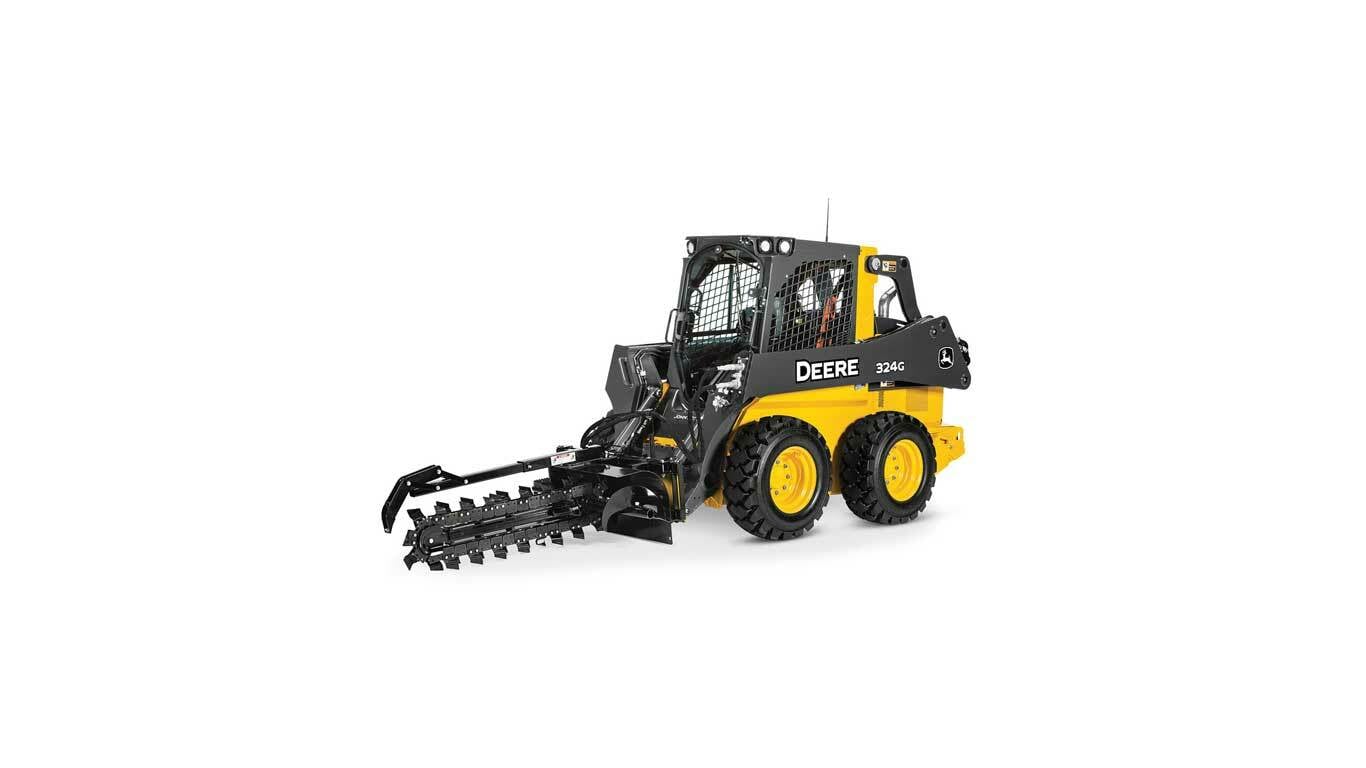
Overview
John Deere's T6 trencher in the Worksite Pro line is a chain trencher attachment for utility runs, drainage lines, and fence post preparation. The T6 cuts a 6-inch wide trench and reaches standard utility installation depths for typical Canadian construction and irrigation applications. Requires continuous-flow auxiliary hydraulics. For Canadian Shield terrain or prairie caliche, confirm the chain and bit selection with your dealer before committing — the drive unit handles the work but the bits need to match the material.
Canada Availability
Best for: utility runs, drainage, irrigation, fence lines
Compare with: Bobcat 84-Inch Deep Trencher for Skid Steers · Skid Pro 36-Inch Depth Skid Steer Trencher · TMG Industrial TMG-SDT36 36" Chain Trencher
Key Facts
- Trench width: 6 inches (15 cm)
- Maximum dig depth: 36 inches (91 cm)
- Application: utility runs, drainage, irrigation, fence lines
- Drive: continuous-flow auxiliary hydraulics required
- Chain and bit selection should match soil type — confirm for rock or frozen ground
- SSQA (universal skid steer quick attach) mount
- Compatible with John Deere skid steers and compact track loaders
Is This Right For You?
Buy if
- You trench through soft to moderate soil for utilities, drainage, or irrigation lines at 36–60 inch depth
- Your soil is clay, loam, sandy loam, or river bottom — chain trenchers cut fast in these conditions
Skip if
- Your soil is solid rock, dense caliche, or Shield granite — chain links and sprockets wear out fast in rock
- You trench in deeply frozen Prairie ground regularly — rock chain at 3–5× wear rate makes winter trenching expensive
Also consider
- Rock wheel trencher if your ground is consistently rocky or hardpan
- Standard auger if you're drilling individual holes rather than continuous trench lines
Designed for John Deere machines but mounts to any skid steer or CTL with a universal SSQA quick-attach plate.
About John Deere in Canada
John Deere attachments are available through an extensive Canadian dealer network, ensuring local service, parts availability, and warranty support coast to coast. Designed to pair with JD machines but compatible with any skid steer via universal quick attach.
Care & Maintenance
- Inspect chain teeth after every use — worn teeth slow penetration dramatically and increase drive motor load; a full day's work can dull a chain in abrasive soil
- Lubricate the drive chain and boom sprockets before each use and again after every 4 hours of continuous trenching
- Check the boom bar for cracking or deformation after work in rocky or abrasive conditions — boom cracks propagate quickly under the bending loads of trenching
- Clean soil from the drive motor cooling fins and chain case after summer use — compacted soil on the motor causes overheating on long cuts
- Store the chain with teeth protected from ground contact — resting a chain on carbide tips on concrete chips the teeth before you've even used it
How to Connect
- Attach trencher boom using Bob-Tach
- Connect high-flow hydraulic couplers
- Test chain tension and direction before cutting
- Call 811 and verify all utilities located before first cut
Ready to Buy in Canada?
Pricing varies by region and dealer stock levels change seasonally. For current availability and a real quote, contact a local dealer.
Find a Dealer Near You → Shop trenchers online →Complete the job — you might also need:
More from John Deere
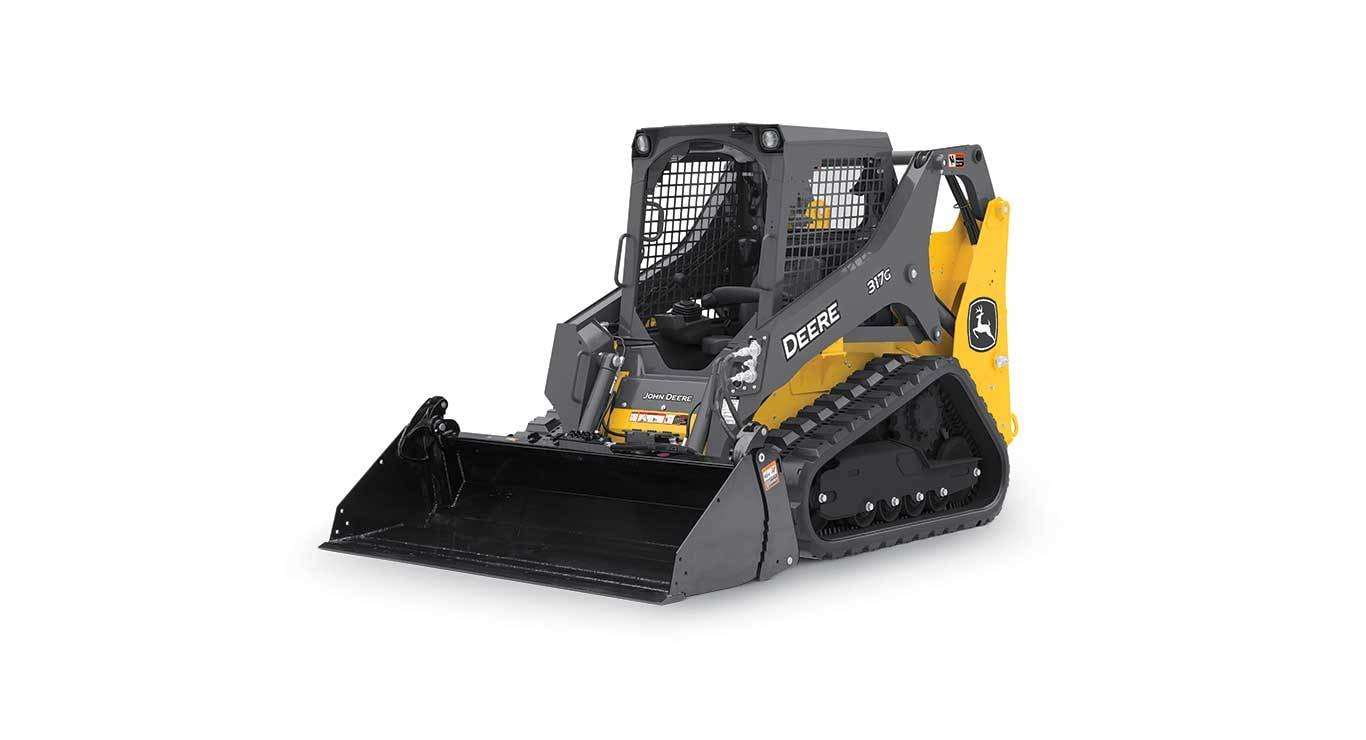
John Deere Worksite Pro 4-in-1 Combination Bucket
Standard FlowJohn Deere's Worksite Pro 4-in-1 bucket is a hydraulic combination attachment for John...
View product →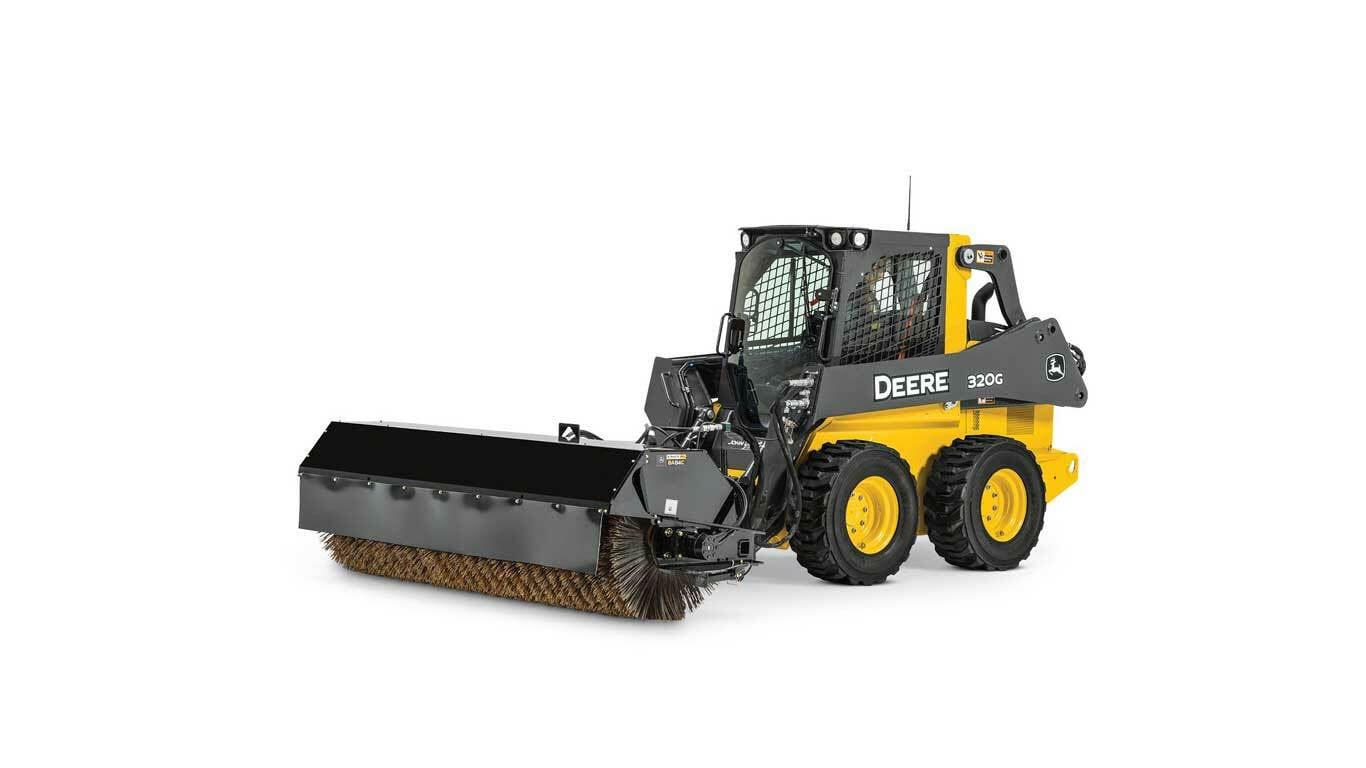
John Deere AB60B 60 Inch Skid Steer Angle Broom
Standard FlowThe 60-inch-inch angle broom sweeps paved and gravel surfaces — parking lots, yards,...
View product → John Deere AB72B 72 Inch Angle Broom
Standard FlowThe 72-inch-inch angle broom sweeps paved and gravel surfaces — parking lots, yards,...
View product →
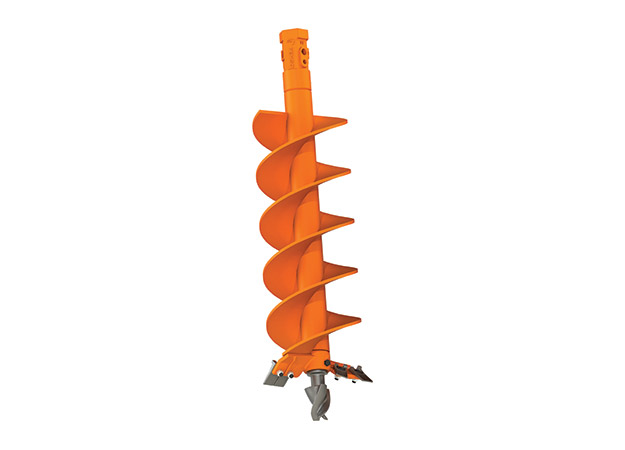
John Deere 30-Inch Auger for Skid Steers in Canada
Standard FlowThe 30-inch-inch auger bit drills post holes, footings, and fence lines in Canadian soil...
View product →✓ Last checked: March 2026