TMG 1500 ft-lb class Hydraulic Breaker for Skid Steers

Overview
The TMG-SHB1500 is a heavy-duty hydraulic breaker for skid steers in the 1500 ft-lb class, intended for 45-100 HP machines. Built for serious concrete demolition, bedrock fracturing, and heavy construction. The nitrogen-charged cushion cell absorbs piston recoil and stores energy for the next blow. Includes moil point chisel set. Universal SSQA mount. Sold direct from TMG Industrial Canada with shipping across Canada.
Canada Availability
Best for: {desc}
Compare with: Atlas Copco SB 102 Hydraulic Breaker (Legacy) · Berlon Industries Skid Steer Hydraulic Breaker · Blue Diamond Skid Steer Hydraulic Breaker
Key Facts
- Class: 1500 ft-lb class
- Type: hydraulic breaker
- Application: {desc}
- Mount: universal SSQA
- Weight: 700–1400 lbs
- Hydraulic flow: 8–20 GPM
Is This Right For You?
Buy if
- You break large reinforced concrete foundations, thick rock, or concrete retaining walls regularly
- Your skid steer is a large-frame machine (80+ HP) rated for a heavy hammer attachment
- Production rate matters — heavy-duty breakers complete demolition jobs significantly faster than medium class
Skip if
- Your machine is medium-frame or smaller — a heavy breaker can exceed carrier weight class limits and damage hydraulics
- Occasional light demolition is your only use — a medium-duty breaker handles that range at lower cost
Also consider
- Medium-duty hydraulic breaker for smaller machines and occasional demolition
- Light-duty breaker for compact machines doing concrete curb or small slab work
Compatible with all skid steer brands and compact track loaders via universal SSQA quick attach. Mid-frame machines (S450–S650 class) are the most common fit.
About TMG Industrial in Canada
TMG Industrial imports and distributes a broad range of construction attachments from its Canadian warehouses, offering competitive pricing with delivery across Canada. A popular choice for contractors who want solid value without long lead times.
Care & Maintenance
- Check nitrogen buffer gas pressure at the start of every season and whenever impact energy feels reduced — low gas pressure is the most common cause of reduced performance
- Lubricate the tool (chisel) bushing and retainer pins before every use — dry bushings accelerate side-loading wear on both the bushing and the tool shank
- Inspect the lower bushing for wear after every 40 hours — a worn bushing allows chisel wobble, reducing impact energy delivery and accelerating shank wear
- Never blank-fire the breaker — operating without material contact destroys the internal valve in minutes; this is the most common cause of breaker failures
- Verify return-line back-pressure annually — back-pressure exceeding the breaker's rated limit destroys the valve seal progressively and may not be immediately obvious
How to Connect
- Attach breaker using Bob-Tach
- Connect single aux hydraulic circuit (breakers use one-way flow)
- Set machine to single-action aux mode if available
- Run 5 seconds at idle before working to allow oil to circulate
Ready to Buy in Canada?
Pricing varies by region and dealer stock levels change seasonally. For current availability and a real quote, contact a local dealer.
Find a Dealer Near You → Shop hydraulic breakers online →Complete the job — you might also need:
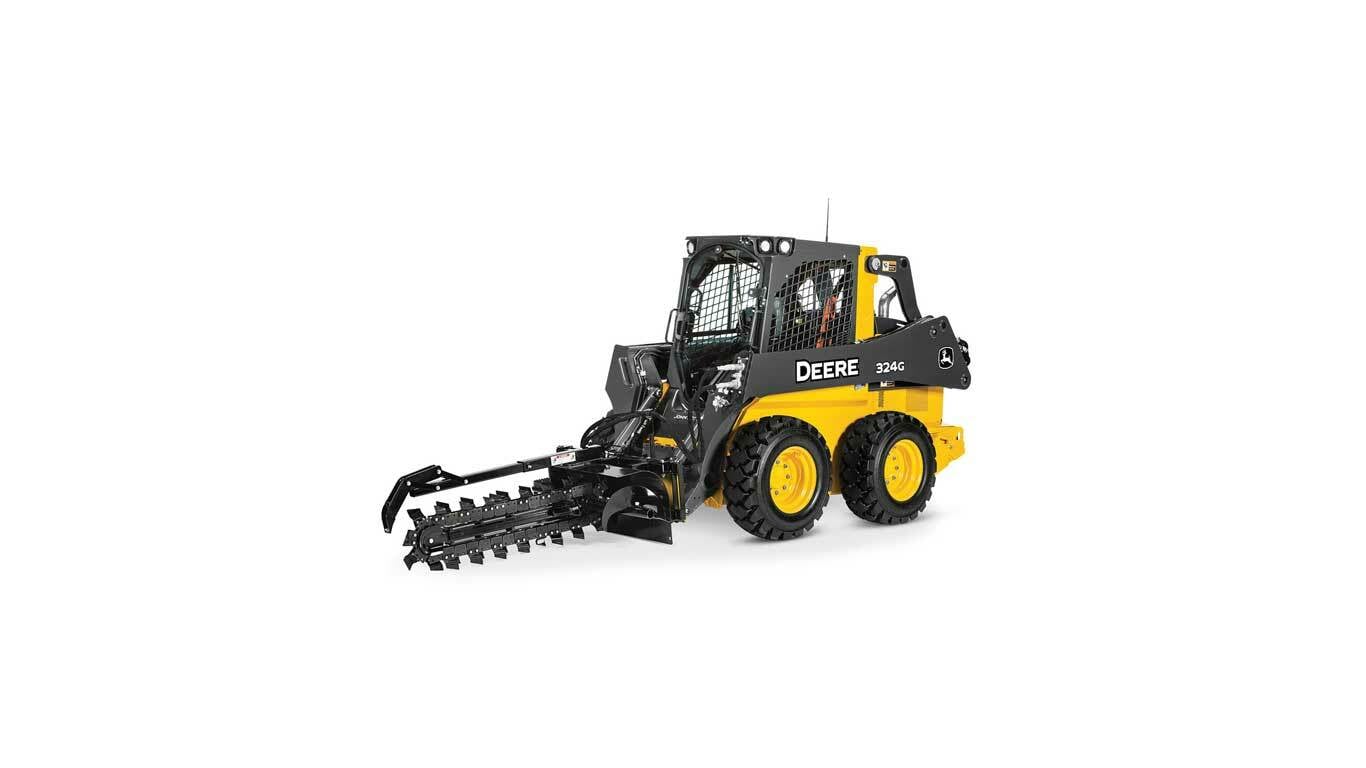
John Deere TR72B 72 Inch Skid Steer Trencher
Standard FlowThe John Deere TR72B is a 72-inch depth chain trencher in the Worksite Pro attachment line...
View product →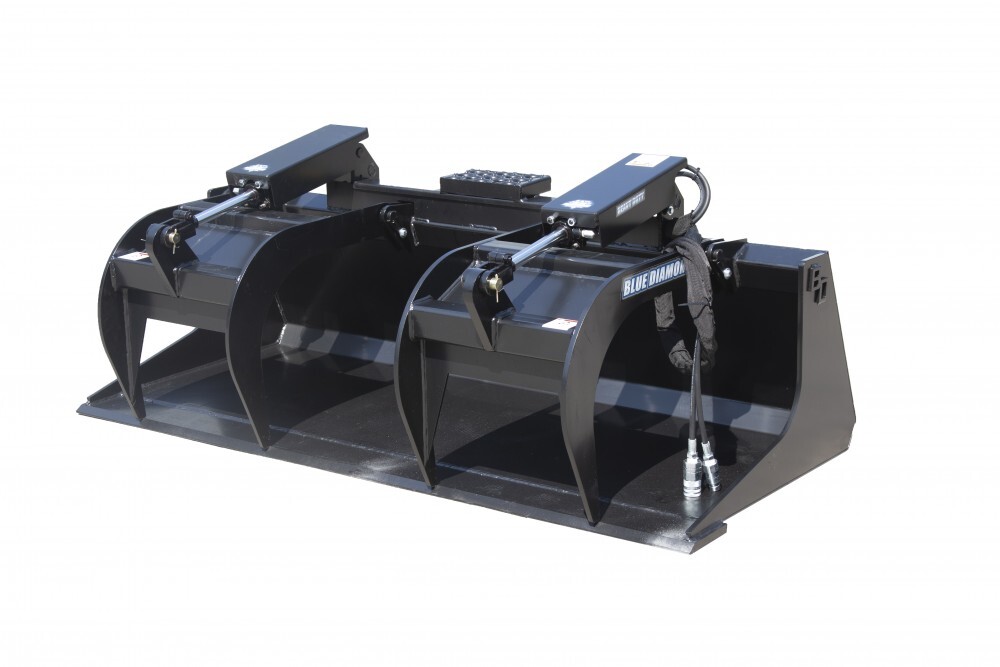
Blue Diamond Heavy Duty 66-Inch Grapple Bucket for Skid Steers
Standard FlowThe Blue Diamond Heavy Duty Grapple Bucket (66-inch, part 106086) is a slightly wider...
View product →More from TMG Industrial

TMG-AB72 72-Inch Skid Steer Rotary Angle Broom
Standard FlowTMG Industrial's AB72 is a 72-inch rotary angle broom for skid steers with a 27-inch brush...
View product → TMG Industrial 72 Inch Angle Broom
Standard FlowThe 72-inch-inch angle broom sweeps paved and gravel surfaces — parking lots, yards,...
View product →
TMG Industrial High Flow Skid Steer Auger Drive
High FlowTMG Industrial's high-flow auger drive is designed for large-frame skid steers with...
View product →
TMG-DB72 72-Inch Skid Steer Dozer Blade
Standard FlowTMG Industrial's 72-inch hydraulic dozer blade provides angle-adjustable grading and...
View product →✓ Last checked: March 2026